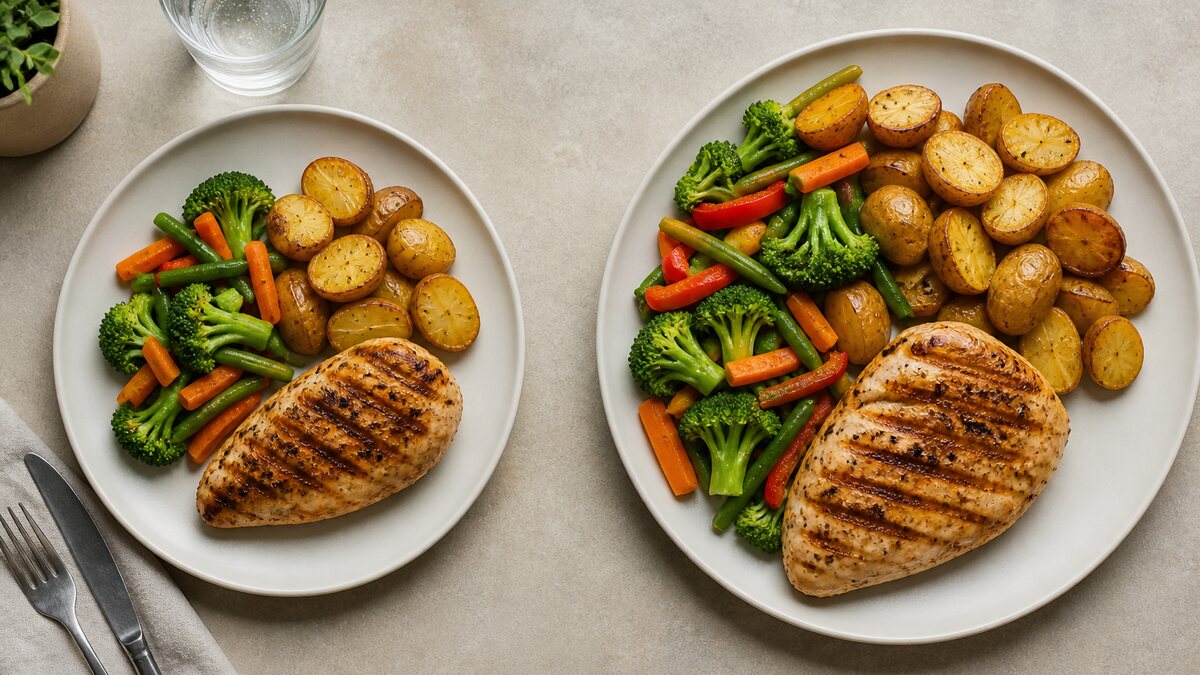
Restaurant portions are not standardized household servings. A plate may be designed for value, presentation, sharing, or a particular cuisine’s conventions. Understanding that difference helps with both ordering and logging: the amount served is information, not an instruction to finish.
Why the same dish changes from place to place
Restaurants choose plateware, recipes, food costs, and service styles independently. One pasta arrives in a shallow bowl; another fills a deep one. A tasting-menu course and a pub main serve different purposes. Even within a chain, preparation and scooping introduce variation around the published standard.
Menu language supplies clues but not guarantees. “Small plate,” “side,” “sharing,” and “family style” describe intent. Piece counts and stated weights are stronger evidence, although a steak weight may be listed before cooking. Ask when the distinction matters.
Read composition, not just plate diameter
A large plate can hold a modest amount spread widely. A small bowl can be deep. Review the meal in components:
- How many distinct pieces of protein are present?
- How high and deep is the rice, pasta, or potato portion?
- Are vegetables a substantial side or a garnish?
- Is sauce pooled underneath or served separately?
- Which extras arrived off-plate?
This is more dependable than assuming every restaurant main equals a fixed multiplier of a home serving.
Use fractions for what remains
Before eating, notice the initial shape or take a discreet photo. Afterward, estimate whether one-quarter, one-third, or one-half remains. Broad fractions are usually easier and more honest than guessing grams from memory. For countable foods, record pieces eaten.
Shared platters need a second step. Dividing by the number of diners gives a starting point, not a rule. Adjust if you clearly ate more rice but less of the fried starter, and log components separately when that difference matters.
Decide what to do with a large serving
There is no single correct response. You can stop when satisfied, split a dish, order a starter as a main where permitted, or take leftovers home. If you plan to save part, moving it aside early makes the boundary clear. If you choose to finish a special meal, log it without trying to compensate dramatically afterward.
Large-looking vegetable volume can be useful, but preparation still matters. Roasted vegetables, salads, and grain bowls may carry oils, dressings, cheese, seeds, or sauces. Focus on the whole composition rather than labeling a dish by its healthiest-looking ingredient.
Portion information for better estimates
Use official restaurant nutrition and serving definitions when available. If your plate visibly differs or you eat only part, adjust the consumed fraction. Without official data, combine menu clues, piece count, plate depth, and preparation. The restaurant menu scanner can organize menu information, while how to estimate restaurant calories gives a component workflow.
Trayly can suggest a reviewable estimate through its restaurant calorie tracker. Tell it the plate was shared, the bowl was deep, or half remained. Those details are often more valuable than the dish name alone, and the result remains an estimate rather than a measurement.
A practical portion check
- Clarify whether the dish is a side, main, or sharing plate.
- Look for piece count, size, and official serving information.
- Identify protein, starch, vegetables, sauces, and off-plate extras.
- Notice or photograph the starting portion.
- Record the fraction or pieces actually consumed.
Portion awareness is not about making every plate smaller. It is about separating the restaurant’s serving decision from your eating decision and preserving that distinction in your log.