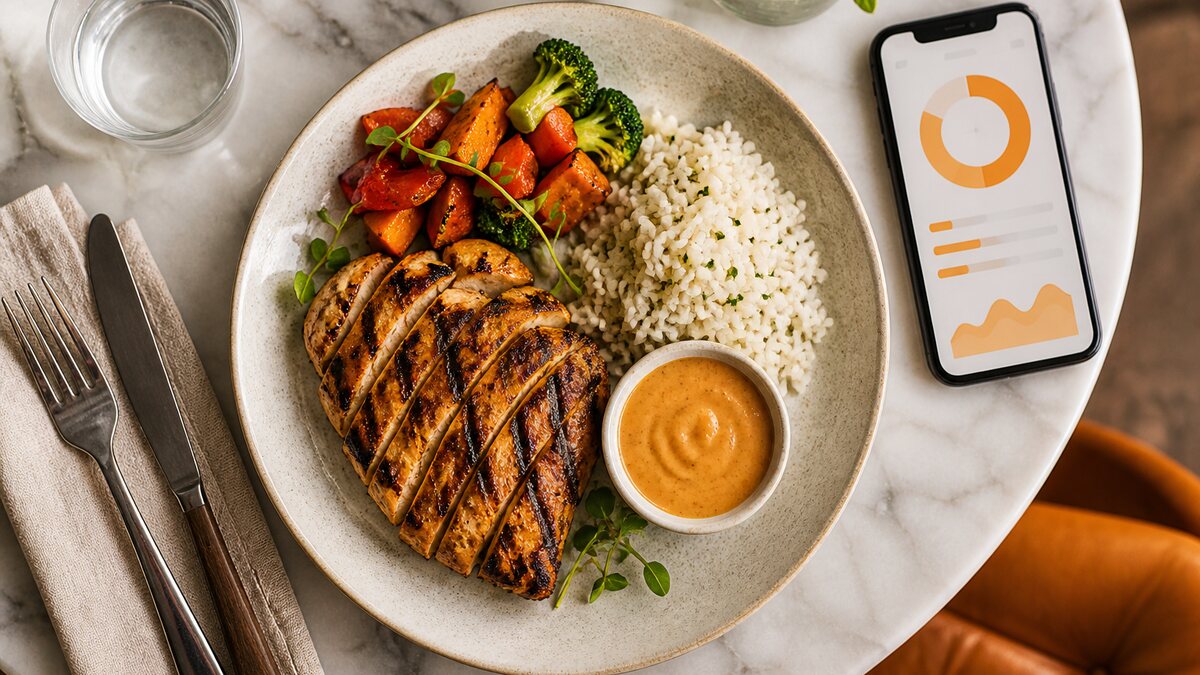
Restaurant calorie estimates become useful when they help you make a consistent decision—not when they pretend to know an unknowable number. A menu description rarely reveals the amount of oil, the weight of the side, or how much sauce reached your plate. You can still build a sensible estimate by using the best evidence first and making uncertainty visible.
Start with the strongest source
Check the restaurant’s website, app, or nutrition sheet before searching a generic database. Published nutrition is usually intended for a standard recipe and serving, so it is the closest match when your order is standard. It can still vary with kitchen preparation and substitutions, but it is more relevant than an entry from another restaurant.
Confirm the serving basis. A pizza value may refer to one slice, a listed salad may exclude dressing, and a meal may assume a particular side. Match the item name, size, add-ons, and number of servings. If you changed the order, use the official value as a baseline and adjust only the changed parts.
Build an estimate from visible components
When official information is unavailable, stop searching for an exact duplicate dish. Break the plate into:
- protein: fish, meat, tofu, beans, or eggs;
- starch: rice, pasta, bread, potatoes, or tortillas;
- vegetables or fruit;
- cooking fat, sauce, dressing, cheese, and toppings;
- drinks, starters, and shared extras.
Choose comparable preparations. Grilled fish is a better reference for grilled fish than “fish dinner”; plain rice is better than a complete curry entry. Components make the assumptions reviewable and easy to correct.
Estimate portions with anchors
Use information you can actually observe: package size, number of pieces, menu weight, slice count, or the fraction of the plate eaten. Familiar household measures can help, but deep bowls and camera angles distort volume. If two plausible portions seem equally likely, record a range or choose a middle estimate rather than manufacturing precision.
Taking a quick before-and-after photo can answer a more important question later: what proportion did you eat? It cannot reveal hidden oil, but it can prevent logging a full serving when one-third remained.
Pay attention to the high-uncertainty parts
Oil, butter, creamy dressings, glazes, cheese, nuts, and fried coatings can be difficult to see and vary substantially between kitchens. That does not mean every restaurant meal is secretly enormous. It means these ingredients deserve more attention than a few extra leaves or tomato slices.
Ask for sauce on the side when that suits the dish. Note whether you used a little, most, or all. For mixed dishes, compare a leaner and richer plausible preparation. The gap provides a useful uncertainty range.
Log what you ate, not what was served
A restaurant portion and your consumed portion are different facts. Separate leftovers before continuing to pick at the plate, especially with shared starters. Record half the fries if half remained; include the bread and drink if you had them. Consistency matters more than whether every crumb is represented.
A restaurant menu scanner can help identify dishes and components when a menu is unfamiliar. Trayly’s restaurant calorie tracker produces an estimate you can review and edit; it is not a laboratory measurement. Add details such as side choice, dressing use, and leftovers before saving.
A repeatable five-minute workflow
- Look for official nutrition for the exact item and size.
- Note substitutions, sides, sauces, drinks, and extras.
- If no official value exists, split the meal into visible components.
- Estimate the amount consumed, not merely the amount delivered.
- Review the result for missing oils or implausible portions, then save it.
For more on uncertainty, read how accurate photo calorie trackers are and the guide to AI calorie estimate accuracy. Over time, reuse comparable meals and assumptions. A transparent estimate made the same way each time is far more informative than a different “perfect” number after every dinner.