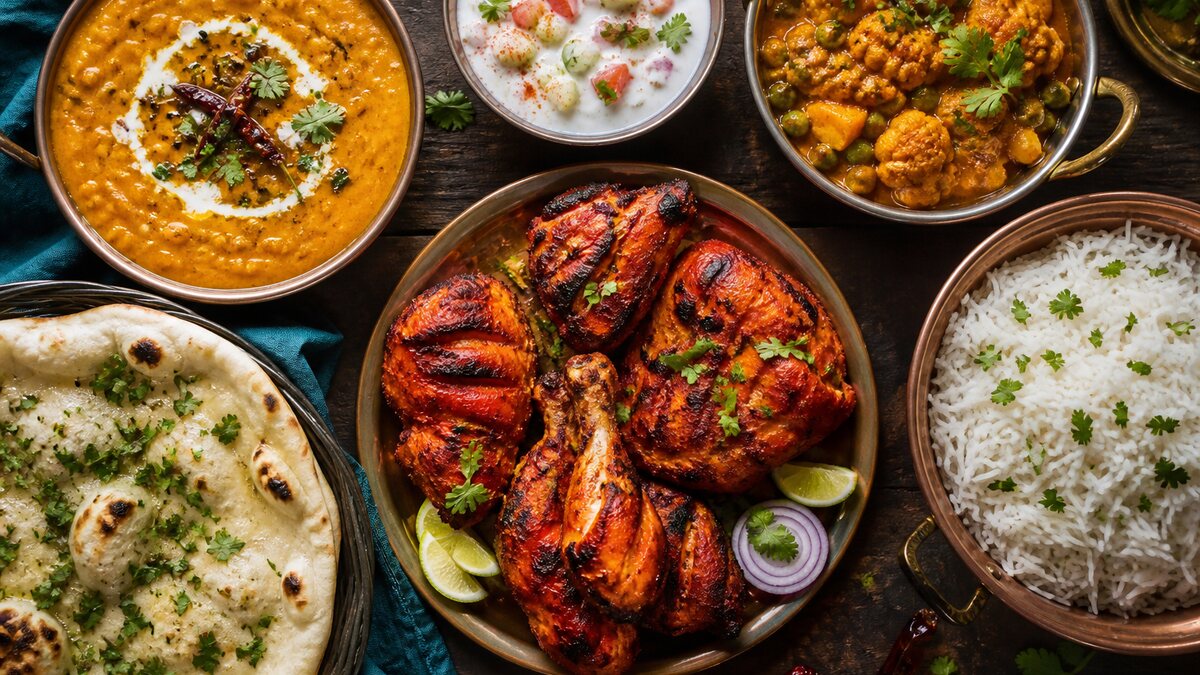
An Indian restaurant table is often a shared system rather than one plate per person. A curry comes in a bowl, rice in another dish, naan in a basket, and chutneys between everyone. The menu names recipes but rarely tells you how much reached your plate.
Do not search for a universal calorie value for “Indian food.” Regional cooking, restaurant recipes, serving vessels, cream, ghee, oil, and the amount each person serves vary enormously. A good estimate separates the order into dishes and reconstructs your share.
Preserve the menu description
If the restaurant or chain publishes nutrition information, prefer it for the exact market, item, and serving. Otherwise save the menu wording with a restaurant menu scan. Preparation terms help classify the dish:
- Tandoori, grilled, roasted, or kebab-style.
- Fried starters such as pakora or samosa.
- Tomato- and onion-based gravies.
- Creamy, buttery, coconut-based, or nut-thickened sauces.
- Lentil, chickpea, vegetable, paneer, meat, or seafood dishes.
Names are not nutritional guarantees. Two chicken tikka masalas can use different ratios of chicken, sauce, cream, and fat. Use the description as evidence, not as a fixed formula.
Curry means protein plus sauce
Log a curry as the recipe that best matches it, then check the ratio on your plate. A bowl with several chicken pieces and little gravy is different from a large serving of sauce with a few pieces. Paneer contributes differently from lentils, chickpeas, chicken, lamb, or fish; select the actual main ingredient.
Sauce is where photographs are least informative. Oil can be emulsified or pooled, and cream, ground nuts, coconut milk, or ghee may not be visually identifiable. Choose a matching sauce family and keep a wider uncertainty range rather than defaulting to a plain stew.
Rice and bread are separate portions
Rice is commonly shared, which makes the serving bowl a poor measure of your intake. Photograph your plate after serving or count serving-spoon portions as a memory cue. Note plain basmati, pulao, or biryani; biryani is a composed rice dish, not plain rice beneath a curry.
For breads, record type and fraction eaten:
- Plain naan, butter naan, garlic naan, or stuffed naan.
- Roti or chapati.
- Paratha, including stuffed versions.
- Puri or bhatura, which are fried.
Size and recipe differ by restaurant, so “one naan” has no universal value. If four people tore bread from a basket, estimate your fraction of each type rather than assigning yourself a whole piece by default.
Starters, chutneys, and drinks count
Samosas, pakora, papad, chaat, and kebabs may be shared before the main dishes arrive. Record a piece count or your fraction of the plate. Chutneys and raita vary: mint chutney, sweet tamarind chutney, yogurt raita, and pickle are not interchangeable. Estimate what reached your plate, especially repeated spoonfuls.
Lassi, beer, soft drinks, and sweetened tea remain separate entries. Water does not need a calorie entry. The aim is completeness, not turning every coriander leaf into arithmetic.
Reconstruct a shared meal
The cleanest method uses three snapshots: the table before serving, your first plate, and any seconds. Then write a short inventory: “one quarter garlic naan, about two serving spoons rice, chicken curry with three pieces and gravy, small spoon dal, half samosa, raita.”
For seconds, add what changed rather than enlarging every component. If you returned only for dal and rice, those are the additions. Visible leftovers can correct the record later. This is the same plate-by-plate strategy used in our buffet tracking guide.
Estimate macros without ranking dishes
Rice and breads generally provide much of the carbohydrate. Lentils, chickpeas, paneer, yogurt, and meat or seafood contribute varying protein. Oils, ghee, cream, nuts, coconut, paneer, and frying influence fat. These broad roles help review an estimate, but they do not establish quantities.
A grilled item is often easier to estimate visually than a curry because the protein portion is exposed, but marinade and basting remain unknown. A vegetable dish can still contain substantial oil. Use official data where available, then a comparable recipe and a range.
A review checklist
- Match every named curry or grilled item to the menu.
- Estimate your share, not the serving bowl’s full contents.
- Separate rice, each bread, starters, sauces, and drinks.
- Check creamy, buttery, nut-based, coconut, and fried preparations.
- Adjust for leftovers and log seconds explicitly.
- Save a reviewable estimate rather than an exact-looking guess.
A restaurant calorie estimate or Trayly can organize these components, but you must review dish identity and portions. No photo reveals the kitchen’s ghee or the food shared before the picture. The AI calorie estimate accuracy guide offers a practical framework for that uncertainty.
Indian restaurant meals are diverse, social, and often layered across several dishes. That is not a tracking problem once you stop asking one database item to represent the table. Keep the curry, starches, accompaniments, and your share visible, and the estimate becomes both calmer and more credible.