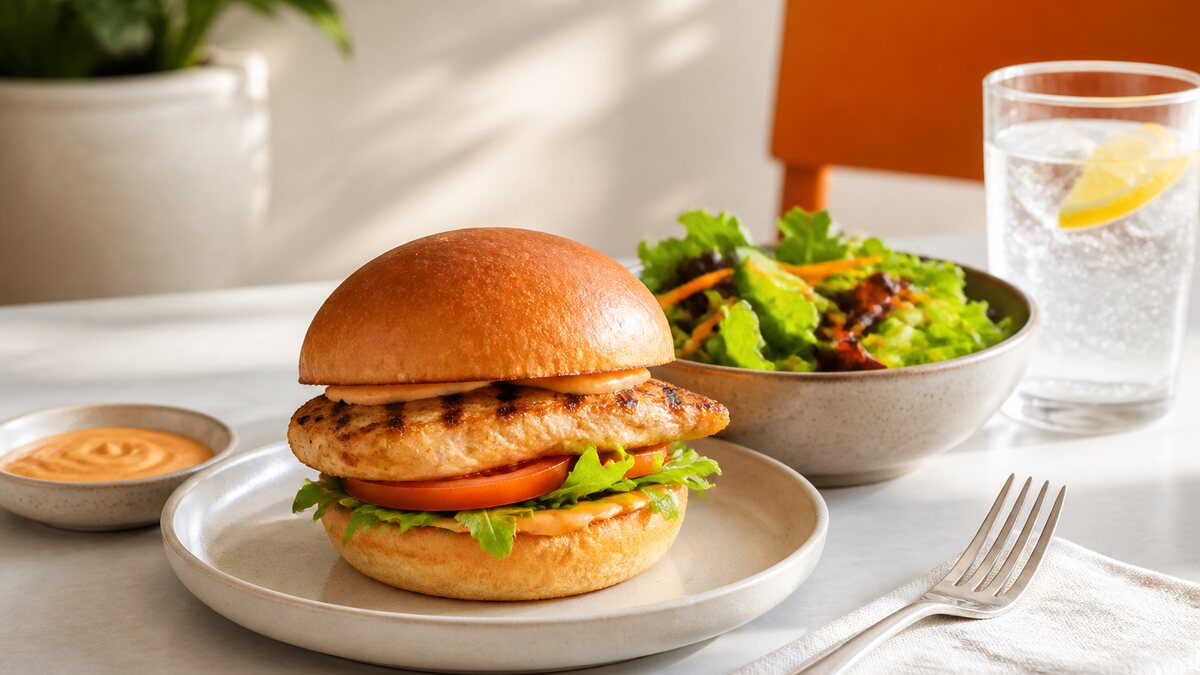
“Healthy fast food” is not one menu item. It is an order that fits your needs on that day: satisfying enough to carry you to the next meal, practical for the situation, and aligned with the nutrients you want to prioritize. You do not have to turn a burger restaurant into a salad bar.
Use the restaurant’s data before rankings
Many chains publish nutrition and allergen information. Compare the exact local product, size, side, dressing, and drink because recipes differ by market. Third-party lists may be outdated or compare unlike portions. Official data is still based on standardized recipes, so kitchen variation remains, but it is the strongest available starting point.
Look beyond one number. Depending on your priorities, review protein, fiber, sodium, saturated fat, added sugar, allergens, or overall energy. People have different dietary and medical requirements; if you have prescribed restrictions, use the restaurant’s documentation and relevant professional advice.
Build an order in layers
Start with a main that you will enjoy. Then ask what it lacks. A small burger may benefit from fruit or a side salad; grilled chicken may need a satisfying carbohydrate side; a vegetarian bowl may need a meaningful bean or tofu portion.
A practical structure is:
- a recognizable protein source;
- fruit or vegetables where the menu makes that easy;
- a side sized for your appetite;
- sauce and toppings chosen deliberately;
- a drink you actually want.
This is a framework, not a purity test. Fried food can be part of the order. The useful question is whether every element defaults to the largest or richest version without adding much enjoyment.
Make swaps with a purpose
Choose grilled instead of breaded if you prefer it or want that trade-off, not because “grilled” automatically makes the entire meal ideal. Downsizing fries, skipping duplicate cheese, choosing a different dressing, or replacing a sugary drink can change the order. Pick one or two changes that matter rather than dismantling the meal.
Beware of health halos. Salads can include substantial dressing, cheese, fried toppings, and large portions; wraps may be large and sauce-heavy. Their ingredient list and official nutrition are more useful than the category name.
Customize clearly
Apps and kiosks make modifications visible, but confirm what the nutrition tool includes. “No mayo” may update the value; an added sauce packet may not. Save the receipt or order screen if you plan to log later.
Sauce on the side makes the used amount easier to estimate. For details, see hidden calories in sauces and dressings. Remember that a packet served is not necessarily a packet consumed.
Match the order to the occasion
A road-trip lunch, post-training meal, late snack, and family dinner call for different choices. Consider how hungry you are, when you will next eat, and what else is available that day. Avoid compensating for fast food with severe restriction; one meal belongs in a broader pattern.
Trayly’s restaurant menu scanner can help compare an unfamiliar menu, while the restaurant calorie tracker creates a reviewable estimate. Prefer the chain’s official values where available and update customizations; estimates are not laboratory measurements.
A quick ordering sequence
- Check official information for your location.
- Choose a main you genuinely want.
- Add produce or a suitable side if useful.
- Select size, sauce, toppings, and drink intentionally.
- Confirm customizations and log what you consumed.
The most sustainable order is not always the lowest-calorie option. It is one that meets the moment without requiring perfection—and that you can repeat without feeling either deprived or out of control.