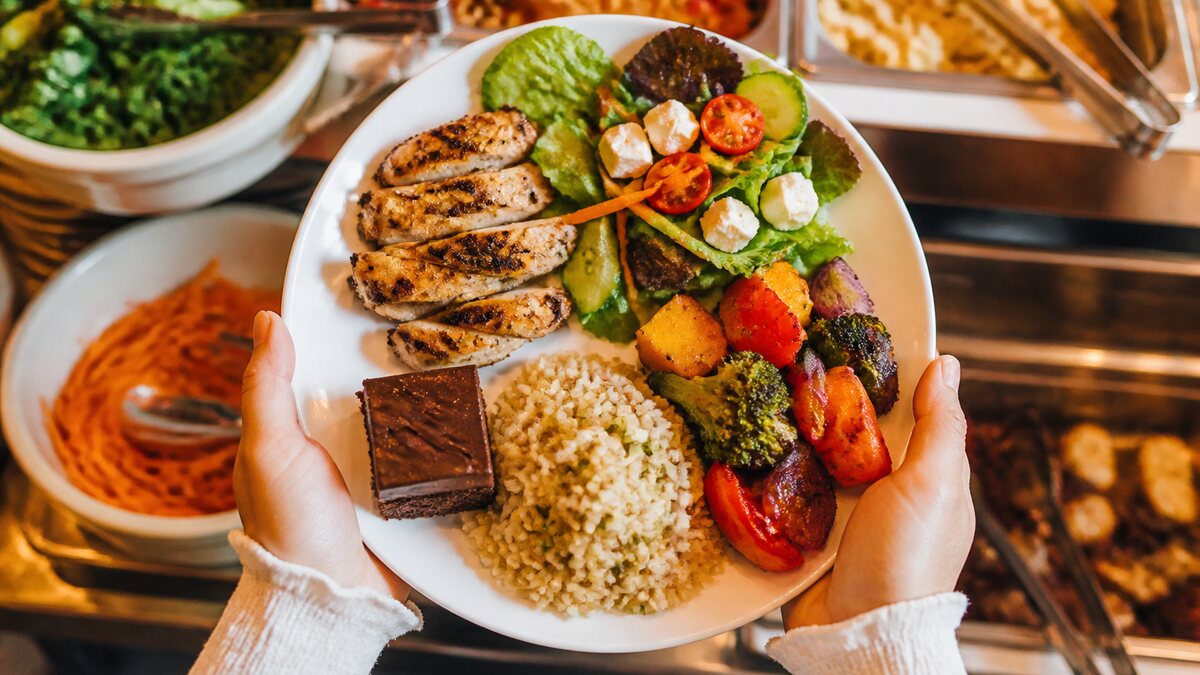
A buffet removes the two clues that make restaurant tracking easier: a named dish and a fixed serving. You build the meal yourself, often over several trips, and a spoonful disappears before you remember it. Trying to reconstruct every bite precisely is frustrating—and precision was never available in the first place.
A better goal is a complete, reviewable estimate. Capture the main components, the portions you actually ate, and the uncertain extras. That is enough to make the meal useful in your log without pretending the serving spoons were measuring tools.
Start before the first plate
Walk the buffet once before serving yourself. This is not a diet trick; it is an information pass. You learn which dishes are available, where sauces are added, and which foods you genuinely want. It also prevents the first plate from becoming a sample of everything simply because you met it first.
If the restaurant publishes nutrition information for standardized items, use it. Hotel breakfasts, chain buffets, and catered events sometimes provide ingredient or allergen cards, and chains may publish portions online. Those values are a stronger starting point than a generic database match, though the amount on your plate can still differ from the stated serving.
Photograph each finished plate
Take one quick overhead photo before eating each course, with the whole plate visible. Photograph seconds and dessert separately. The purpose is memory, not image-based measurement: a photo cannot reveal hidden oil, plate depth, or the recipe in a curry.
If taking photos feels awkward, make a short phone note instead: “plate 1: chicken, rice, vegetables, two sauces; plate 2: small pasta serving; dessert.” Logging during or immediately after the meal is much easier than recalling three similar plates at night.
Read a plate in zones
Break each plate into visible components rather than searching for “buffet dinner.” Work in a consistent order:
- Protein: carved meat, fish, eggs, tofu, beans, or cheese.
- Starch: rice, noodles, potatoes, bread, pastry, or grain salad.
- Vegetables and fruit: note whether they are plain, dressed, or cooked in oil.
- Sauces and toppings: gravy, mayonnaise, chutney, butter, nuts, and cheese.
- Extras: drinks, dessert, and tastes eaten while moving through the line.
Mixed dishes need not be dismantled ingredient by ingredient. Log lasagne, curry, or fried rice as a dish, then add a clearly separate extra such as rice or sauce. Choose an entry whose preparation resembles what you saw rather than the entry with the most convenient number.
Estimate the amount you ate
Buffet spoons vary, so “one scoop” is weak evidence. Compare portions with familiar references: a fraction of the plate, the number of pieces, or a usual household serving. If you know the plate size, include it in a restaurant meal estimate. If not, use a range and select a reasonable midpoint.
Account for what remained. If you served a large piece of meat but left a third, log roughly what you ate. The same applies to rice and dessert. Do not subtract sauce absorbed into food merely because the plate looks clean; only adjust for an obvious amount left behind.
Handle hidden oil and sauce honestly
Buffet food is prepared to remain appealing in serving trays. Vegetables may be glazed, rice may contain fat, and meat may be basted. You usually cannot quantify that from sight. Match the cooking style—roasted with oil, creamy, fried, or steamed—and avoid automatically choosing “plain” versions.
Sauces deserve separate attention when you added them yourself. A thin drizzle and a ladle are not the same. Estimate the served amount, then reduce it only if a visible pool remained. This uncertainty is one reason calorie outputs should be treated as estimates, not measurements. Our guide to AI estimate accuracy explains what photos and descriptions can and cannot establish.
Track seconds as another plate
Do not replace the first entry with a vague “large portion.” Add the second plate. It may repeat the first, but often it does not: people return for one favorite dish, then add bread or sauce. Separate plates preserve that information and make later review easier.
Small tastes matter collectively, but there is no need to invent precision. Combine several bites into a modest sample entry, or add the specific item if it was substantial. The aim is to avoid both extremes: ignoring every taste or logging six crumbs as exact servings.
Use a sensible uncertainty range
After building the meal, ask what could materially change the result. Usually it is not the salad leaves; it is an unknown quantity of oil, a creamy sauce, fried preparation, alcohol, or dessert. Review those components first.
Trayly can turn a photo and description into a reviewable estimate, but you should correct the dish, portion, and sides when it misreads the plate. The menu scanner can also help identify likely preparations before you serve yourself. Neither tool knows the kitchen’s recipe or the weight on your fork.
A five-minute buffet workflow
- Walk the line once and note any published information.
- Photograph every finished plate and drink.
- Log visible components in zones, grouping true mixed dishes.
- Adjust for obvious leftovers and record seconds separately.
- Review oil, sauces, fried foods, and dessert—the largest uncertainties.
- Save the estimate and move on.
This method also works for shared meals and unfamiliar takeout; the same component logic is developed in our Chinese takeout calorie guide. A buffet log will never be laboratory data. It can still be consistent, transparent, and much more useful than either skipping the meal or forcing it into one generic entry.