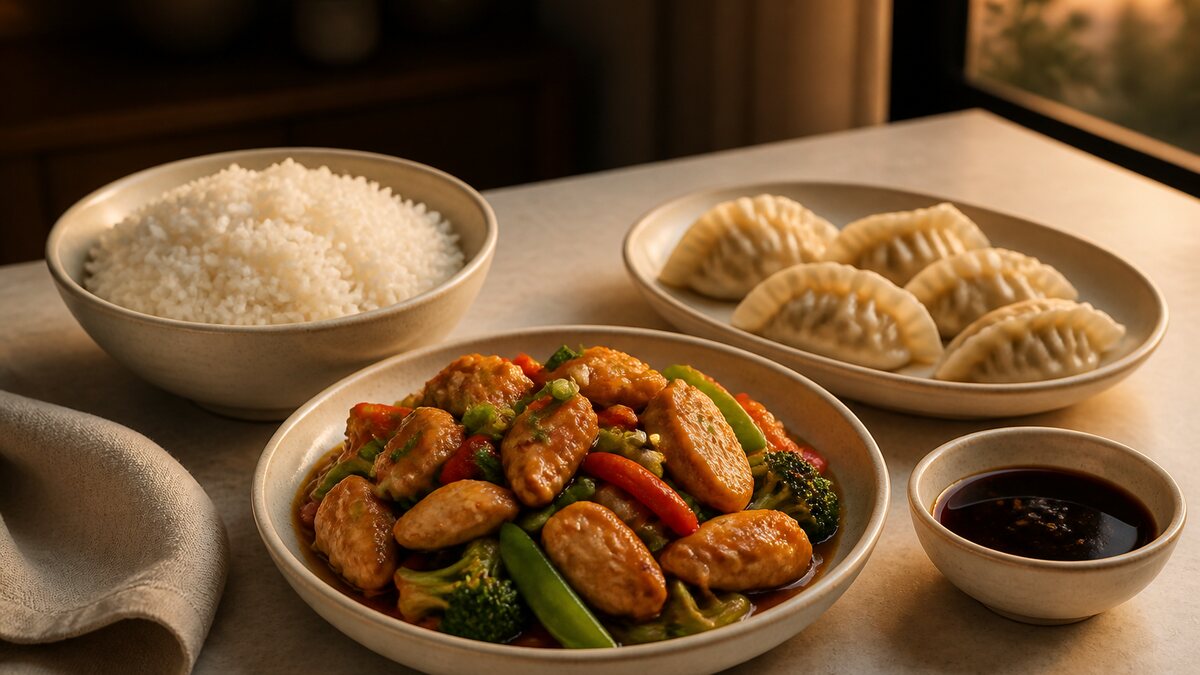
Chinese takeout is not one cuisine, recipe, or portion. A carton may contain mostly noodles, a stir-fry may arrive with rice in a separate box, and a combo can add fried rice, an egg roll, and sauce. Restaurants serving dishes with the same English name may use different regional styles, ingredients, and amounts of oil.
Skip universal calorie lists. They cannot account for recipe, carton size, or how much you ate. Instead, map the containers, prefer official restaurant information when available, and create a component-based estimate you can review.
Inventory the bag before eating
Open every container and match it to the receipt or menu. Take one photo showing all containers, then photograph your served plate. This prevents rice, appetizers, and dipping sauce from disappearing from memory while keeping shared portions separate from your own.
Build a quick inventory:
- Main stir-fry, braise, noodle dish, or rice dish.
- Separate steamed or fried rice.
- Protein and vegetables visible in the main.
- Sauce included in or packed beside it.
- Dumplings, rolls, wontons, soup, or other starters.
- Drinks, fortune cookies, and desserts actually consumed.
If a chain publishes nutrition data, use the exact item, serving size, and market. Check whether rice is included. Official values represent the standard recipe, so custom protein, extra sauce, or a different side may still need adjustment.
Separate starch from the main
Takeout menus often list “beef with broccoli” without making the rice relationship obvious. If rice arrives separately, log it separately. Estimate your fraction of that container rather than assigning the whole box to one meal. Steamed rice, fried rice, lo mein, chow mein, and rice noodles are different preparations.
For a noodle or fried-rice main, the starch is already part of the dish. Do not add a full noodle portion again when logging vegetables and protein. Describe the ratio instead: mostly noodles with some chicken and vegetables, or a mixed fried rice with egg and prawns.
Identify the cooking method
Menu language helps distinguish preparations:
- Steamed, poached, braised, roasted, or stir-fried.
- Battered, crispy, fried, or salt-and-pepper style.
- Glazed, sweet-and-sour, honey, sesame, or orange-style sauces.
- Garlic, black bean, oyster, chili, brown, or white sauce.
- Dry-fried dishes versus dishes with a large sauce volume.
“Chicken” does not tell you whether it is grilled slices or battered pieces under glaze. Keep the method in the entry. A restaurant menu scan is useful when the dish arrives looking different from its short receipt label.
Treat sauce and oil as uncertainties
A shiny stir-fry may contain cooking oil, but a photograph cannot quantify it. Thick sauces may include starch and sweeteners; pale sauces are not automatically low in energy; vegetables can absorb oil. Choose a comparable restaurant preparation rather than a plain home-cooked ingredient entry.
When sauce pools at the bottom, estimate how much you served and how much visibly remained. Do not assign the whole container’s sauce to your meal if most stayed behind. Equally, do not remove all sauce because an empty carton looks clean—the food carried some with it.
Sauce on the side is easier: record a spoonful, fraction of a tub, or another honest visual estimate. Precision beyond what you observed is not useful.
Count protein and vegetables without dismantling dinner
You do not need separate entries for every broccoli floret. Select the closest complete stir-fry, then adjust only when the ratio is clearly unusual. If a dish was mostly vegetables with a few beef slices, choose a reference that reflects that. If it was a carton of battered chicken with little vegetable content, do not log it as plain chicken and broccoli.
For tofu, distinguish steamed or braised tofu from fried pieces. For meat and seafood, retain breading, skin, glaze, and preparation. These clues influence both calorie and macro estimates more than the exact number of pepper strips.
Shared cartons need personal portions
Serving directly from cartons makes portions hard to remember. Put your food on a plate first if practical. If everyone grazes from the containers, photograph before and after, then estimate your share based on pieces and container fractions.
Log seconds as additions. If the first plate held rice, beef, and vegetables and the second held only noodles and one dumpling, record that difference. Our buffet meal tracking guide uses the same plate-by-plate method.
Remember appetizers and condiments
Egg rolls, spring rolls, fried wontons, dumplings, scallion pancakes, ribs, and soups vary by restaurant and cooking method. Count pieces and specify steamed, boiled, pan-fried, or deep-fried. Add chili oil, sweet dipping sauce, mustard, or extra glaze according to the amount used.
Small sauce packets need not dominate your attention, but several used packets should not vanish from the record. Fortune cookies and drinks count only if consumed; the fact that they were in the bag does not make them part of your intake.
Turn the meal into a reviewable estimate
Write a compact description: “About one third container steamed rice; one quarter carton beef and broccoli with brown sauce, some sauce left; four pieces battered orange chicken; two steamed dumplings; a little chili oil.” Then use a restaurant calorie tracker or comparable official entries to draft the meal.
Trayly can help organize a photo and description into a reviewable estimate. Correct container fractions, cooking methods, and sides before saving. It cannot know oil quantity, sauce recipe, or carton depth, so its output is not an exact measurement. The guide to AI calorie estimate accuracy explains how to interpret that uncertainty.
The most reliable Chinese takeout log is not the one with the most ingredients. It is the one that correctly identifies the starch, main preparation, sauce, fried extras, and your fraction of every shared container. That is enough detail to be useful without turning dinner into an audit.