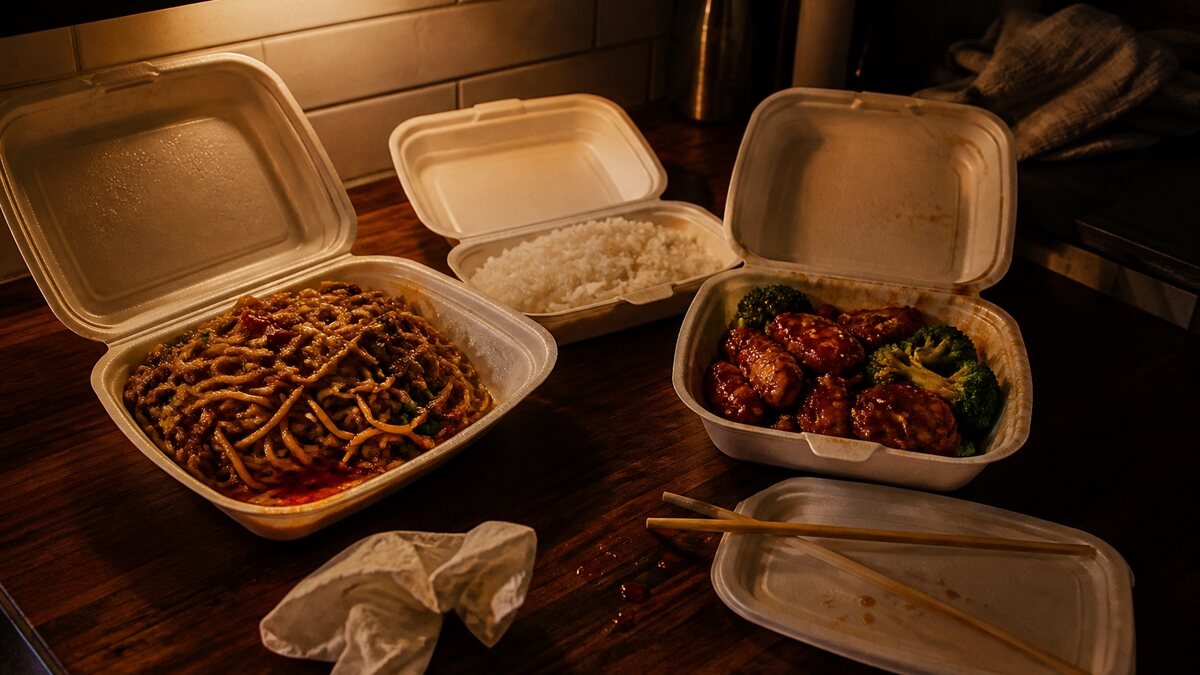
Takeout is where food logs often fall apart, not because people stop caring, but because the bag is a pile of parts. Rice, sauce, oil, protein, and a side arrive together. The receipt names a dish. The container does not tell you how much of each part you ate.
The useful move is to stop treating the bag as one mystery object.
The dish name is not the portion
“Chicken with broccoli” and “pad thai” are menu names. They are not recipes you can weigh. Two restaurants with the same dish name can use different oils, different sauces, and different amounts of rice.
If you log the dish as a single generic database item, you are choosing someone else’s recipe. Sometimes that is close enough to keep a streak going. It is not a measurement.
When the restaurant publishes nutrition information for a standard item, start there. Then change the log to match what arrived: extra rice, sauce left behind, half the noodles.
Split the bag into parts you can see
Most takeout is easier to review if you name the visible parts:
- The starch: rice, noodles, bread, fries.
- The protein: chicken, tofu, fish, beef, eggs.
- The sauce or glaze, including what pooled at the bottom.
- The oil you can see on the vegetables or the noodles.
- The extras: spring rolls, dumplings, drinks, the cookie in the bag.
You do not need a lab to notice that the sauce is a layer, not a drizzle. You also do not need to finish every container because it came in the same order.
If you eat the protein and half the rice, that is the meal. The rest can stay in the fridge without being assigned to today.
Photos help, then they stop
A photo is useful for identifying what is in the containers and for remembering the meal later. It is a weak source for exact energy. Camera angle, container depth, and hidden sauce all hide quantity.
Use the photo to name the dish and the parts. Then add what you know: which containers you opened, how much rice you actually ate, whether you drank the sugary sauce or left it.
If you only have a photo, treat the number as an estimate and move on. A reviewed estimate is more useful than an abandoned day.
Drinks and extras are still the meal
The bag is not only the main dish. A sweetened iced tea, a side of dumplings, and the leftover sauce you used as a dip can move the day more than the difference between two similar mains.
Log the extras you ate. Skip the ones you did not. That sounds obvious until the receipt is a single total and the food log wants a single item.
A practical order of work
- Open the containers before you start eating, so you can see the parts.
- Decide what you will actually eat. You can save the rest.
- Prefer the restaurant’s published values when they exist for that item.
- Otherwise describe the dish in parts: starch, protein, sauce, oil.
- Review the estimate, then save.
Takeout is not a special category of eating. It is a meal with more packaging. The log gets easier when the packaging is not allowed to hide the food.