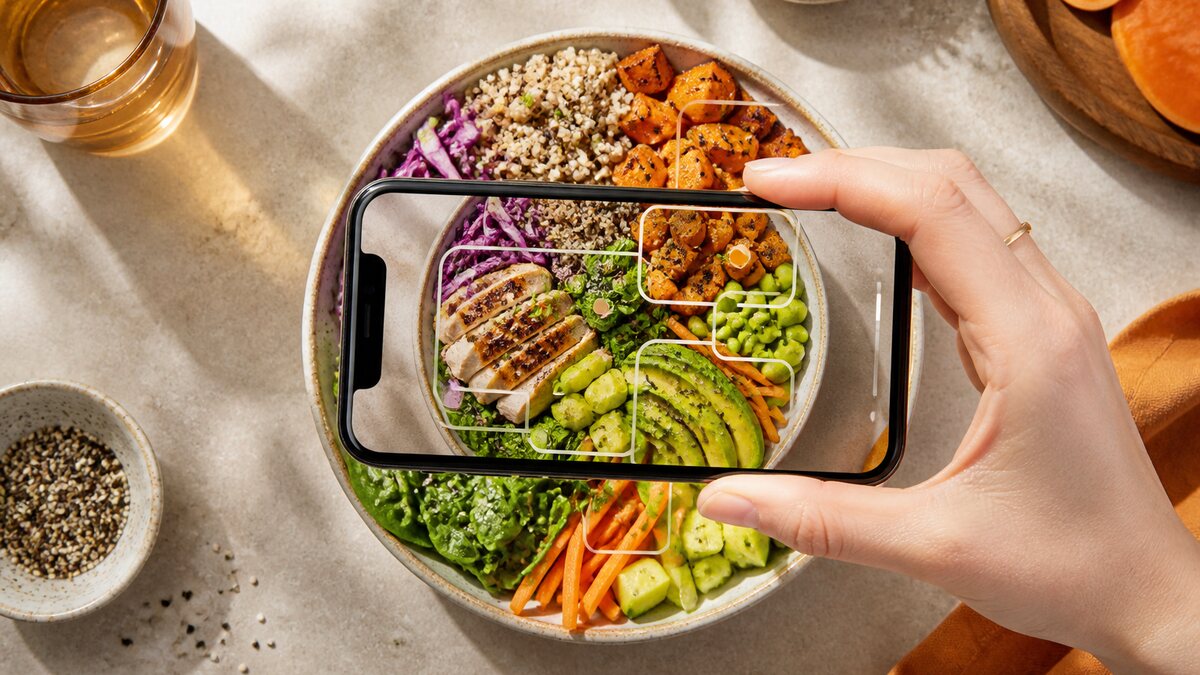
Photo calorie trackers remove friction: take a picture, receive a suggested meal, and edit the result. Their accuracy, however, depends on what the image reveals and what the software must infer. A clear photo may identify foods well while still leaving portion depth, recipe, and cooking fat unresolved.
Identification and measurement are different tasks
A camera can often recognize visually distinctive foods: a bread roll, grilled salmon, fries, or broccoli. Recognition does not establish weight. A mound of rice can spread across a plate or fill a deep bowl; both can look similar from above. Nor can a photo determine whether vegetables were tossed in a teaspoon or a generous pour of oil.
Mixed dishes add another layer. Curry, soup, lasagna, and smoothies hide ingredients and ratios. Two plates that look alike may use different cream, cheese, sugar, or fat. Consequently, a result should be read as a plausible interpretation, not an assay of the meal.
What improves a photo estimate
Give the tracker evidence it can use:
- Photograph the full plate in good, neutral light.
- Use a slight angle that shows both surface area and depth.
- Keep a familiar object, plate rim, or package in frame for scale.
- Separate sauces and sides when practical.
- Add the menu name, restaurant, portion size, and preparation notes.
- Record what remained after eating.
One image is not always enough. A second side view can clarify bowl depth, while a package label can establish serving size. Text context is particularly valuable for visually similar foods such as breaded versus grilled chicken.
Common failure modes
Hidden fats and dressings are the obvious problem, but there are others. Ingredients overlap, garnishes cover the base, and beverages can look identical despite different recipes. Reflections obscure food; wide-angle lenses distort edges; restaurant lighting changes color. A tracker may also map an unfamiliar regional dish to a better-known but nutritionally different item.
Watch for internally inconsistent output. If a large plate is assigned a tiny portion, or a visible sauce is omitted, edit it. Check whether the result includes every component and whether units refer to cooked or uncooked food.
Official data can override visual guessing
For a standard chain product, published restaurant nutrition is generally the better starting point. Match the exact item, size, side, and customization. The photograph remains useful for confirming what arrived and how much you ate, but it need not reinvent a known recipe.
At an independent restaurant, compare the photo result with the component method in how to estimate restaurant calories. If several interpretations are plausible, retain a range rather than selecting the most reassuring number.
Accuracy should match the purpose
For maintaining a consistent diary, a fast reviewed estimate may be enough. For a situation requiring prescribed nutrient amounts, photo inference may be inappropriate; use labels, measured recipes, official data, and guidance from a qualified professional as relevant.
Judge patterns across many meals, not one uncertain plate. Errors can run in either direction, and repeated assumptions—always overlooking dressing, for example—matter more than random variation.
Trayly’s photo and restaurant calorie tracker estimates are designed to be reviewed. Correct food identity, portion, sauce, and leftovers before saving; the output is not a lab measurement. The detailed AI calorie estimate accuracy guide explains the uncertainty further.
A useful review checklist
- Did it identify every visible component?
- Does the portion fit the plate, bowl depth, and pieces?
- Are oil, dressing, toppings, and drinks represented?
- Is official nutrition available for this exact product?
- Did the log reflect what was eaten rather than what was photographed?
Photo tracking is best understood as assisted note-taking. The camera shortens data entry; your context turns the suggestion into a credible record.