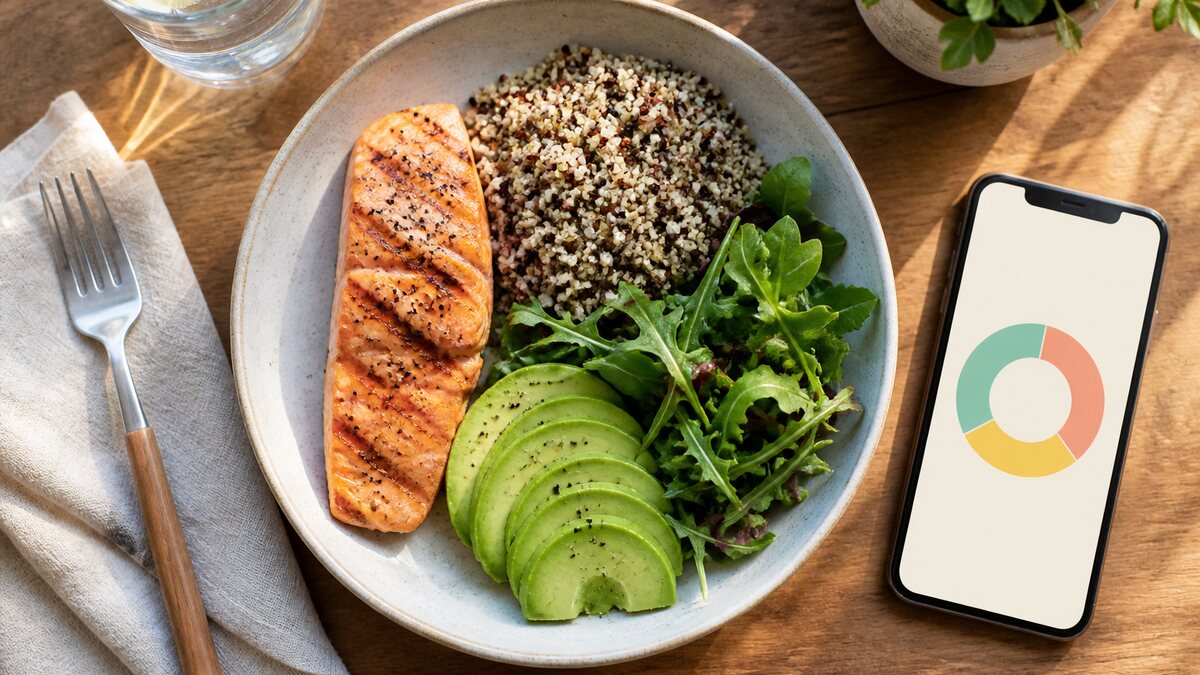
Tracking protein, carbohydrate, and fat in a restaurant is harder than tracking a packaged meal because the recipe is not on the table. A dish name may identify the main protein but say nothing about oil, sugar in a glaze, or the weight of rice. Exact macro totals are therefore rarely available outside restaurants with standardized nutrition data.
That does not make the log useless. Build it from visible components, mark uncertain ingredients, and spend your attention where better information changes a decision.
Begin with your purpose
Macro tracking can serve different goals: ensuring enough protein, planning carbohydrate around training, or understanding meal patterns. Decide which variable matters most. If protein is the priority, identify that portion carefully and accept a wider range for sauce. Trying to perfect all three macros from a photo creates precision the evidence cannot support.
Individual macro targets depend on context. This article is a logging method, not a prescription; a qualified dietitian can help with clinical or performance needs.
Prefer exact restaurant data
For standardized chain items, use the restaurant’s current official nutrition facts. Match the item, serving size, sides, and customizations. Check whether values cover the full plate or only the main item. “Chicken sandwich” data may exclude fries and dipping sauce.
When official data does not exist, estimate components using reputable food-composition sources. A generic entry for the whole dish can hide implausible assumptions, such as a creamy curry with almost no fat.
Build the dish by macro role
Protein anchors
Identify meat, fish, eggs, dairy, tofu, tempeh, beans, or lentils. Note whether the listed or visible weight includes bone, batter, skin, or sauce. Cooking changes water content, so do not mix a raw weight with cooked database values.
Carbohydrate sources
Count bread, rice, pasta, potatoes, tortillas, grains, beans, fruit, and substantial sweet sauces. Estimate the amount served and the fraction eaten. A side swapped from salad to fries is a meaningful edit and should not remain hidden under the main dish name.
Fat sources
Some fat is visible in cheese, avocado, nuts, creamy dressing, and fatty cuts. Cooking oil and butter are less visible and often drive uncertainty. Record an allowance based on preparation and visible residue instead of assuming zero. Equally, do not assign an extreme amount without evidence.
Watch for ingredients that play two roles
Beans contribute carbohydrate and protein; cheese contributes protein and fat; nuts contain several macros. Use a complete database entry for each ingredient rather than assigning it to only one category. Your tracker should sum the nutrient profile.
Sauces are recipe-dependent. Tomato salsa, oil-based pesto, sweet glaze, and cream sauce cannot share one “sauce” entry. Ask for ingredients, use official data, or select the closest documented recipe and keep a range.
Improve the inputs
A useful pre-meal photo shows the whole plate, sides, and a size reference. Add menu text, cooking method, and what you left. Our food photo guide explains angles that reveal depth instead of flattening the meal.
Trayly can turn those inputs into a reviewable estimate through the restaurant calorie tracker. It is not a laboratory test. Check whether it identified the correct protein, side, and sauce, then adjust portions manually. Read nutrition facts versus estimates to choose the right source.
A practical macro workflow
- Copy official macros for the exact standard item when available.
- Otherwise identify the protein anchor and estimate its edible cooked portion.
- Add each carbohydrate side and the amount consumed.
- Add visible fats, dressings, cheese, and a reasonable cooking-fat allowance.
- Include drinks, starters, and dessert if they belong to the meal.
- Review whether the calorie total is broadly consistent with the macros and ingredients.
That final check catches missing oil or an incorrect serving count, but remember that labels round values and alcohol contributes energy outside the three common macros.
Use ranges where they belong
You might know there were two tortillas but not how much oil was in the filling. Keep the first input firm and the second flexible. Save notes for recurring orders so your method remains consistent even if the kitchen varies.
Restaurant macro tracking works best as structured estimation. Name the components, use official information when it exists, and refuse both convenient undercounting and invented precision.