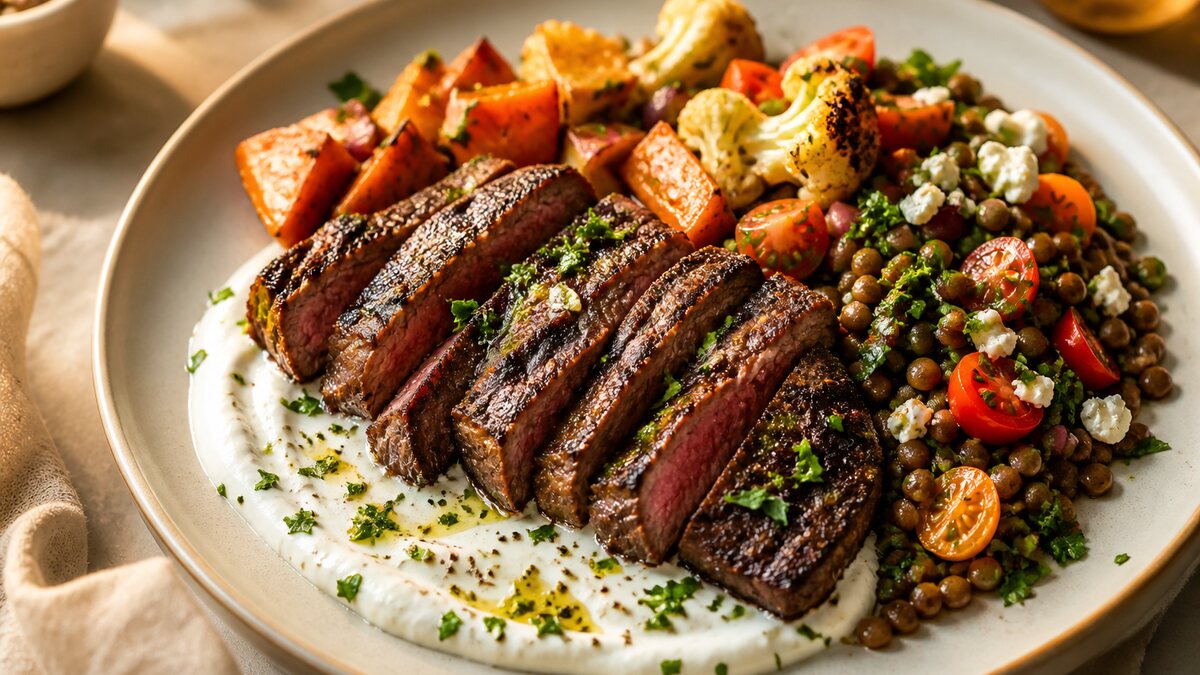
A high-protein restaurant meal is easier to find when you search for ingredients rather than a “fitness” label. Menus may highlight steak and chicken but overlook fish, eggs, tofu, beans, lentils, yogurt, and combinations of grains and legumes. Your best choice also depends on appetite, preferences, allergies, and the rest of your day.
Find the protein anchor first
Read the nouns before the adjectives. Identify the main protein source and whether it is central or decorative. Chicken scattered over a large noodle dish may contribute less than the menu photo suggests; a bowl built around tofu and edamame may contribute more.
Useful anchors across cuisines include:
- grilled, roasted, steamed, or braised fish and meat;
- tofu, tempeh, seitan, beans, lentils, and chickpeas;
- eggs, strained yogurt, cottage-style cheese, and other dairy where suitable;
- mixed plates that combine legumes, grains, seeds, or dairy.
“Plant-based” does not automatically mean protein-rich: a vegetable pasta or mushroom burger may have a different profile from a lentil bowl. Check the actual ingredients.
Look for evidence of portion size
Piece count, burger patty count, skewer number, egg count, or listed weight can clarify the order. Ask whether a stated meat weight is raw or cooked if you need closer tracking. At chains, official nutrition can provide protein for the standard item; independent restaurants may only offer a description.
Do not infer protein from plate size. A huge bowl may be mostly greens or rice, while a compact entrée may center on fish. The article on restaurant portion sizes gives better visual cues.
Adjust the meal without doubling everything
If the base dish is light on protein, options may include extra beans, tofu, chicken, fish, egg, or yogurt sauce. An extra full entrée is rarely the only solution. You could also choose a protein-containing starter to share or pair soup with a suitable side.
Ask how substitutions affect other ingredients. “Double protein” may also bring extra cheese or sauce; removing a bun does not increase protein. Choose modifications for the nutrient you actually want.
Keep preparation and balance in view
Protein-rich and lower-calorie are not synonyms. Breaded meats, fatty cuts, cheese-heavy dishes, and creamy sauces can provide substantial protein and also be energy-dense. That may fit your needs; it should simply be understood. If you want a different balance, compare grilled or roasted preparations and control sauce quantity.
Add vegetables, fruit, grains, potatoes, or bread according to appetite and context. A satisfying meal is not protein alone. Fiber-rich sides and carbohydrates can make the plate more complete, especially when the next meal is hours away.
Examples by menu type
At a Mediterranean restaurant, consider fish, chicken skewers, lentil soup, bean salad, or yogurt-based sides. At a Japanese restaurant, sashimi, grilled fish, tofu, edamame, and egg dishes are visible anchors, while sauces and rice remain separate components. At a café, eggs, yogurt bowls, bean dishes, and sandwiches with a substantial filling may work. At fast-food restaurants, compare official protein values for patties, grilled options, bean-based mains, and customizations.
Vegetarian diners can combine sources rather than searching for one giant substitute. Lentils with yogurt, beans with rice, or tofu with edamame create a meal with multiple contributors. Vegan diners should verify that sauces and sides meet their requirements.
Track without inventing precision
Use the restaurant’s official information where available. Otherwise describe the protein type, preparation, approximate portion, sides, and sauces. Trayly’s restaurant menu scanner can surface likely protein sources, and its restaurant calorie tracker offers a reviewable estimate rather than a lab measurement.
- Identify the primary protein source.
- Check whether its portion is clear and substantial for your needs.
- Add or swap one component if useful.
- Review cooking method, sauce, sides, and overall satisfaction.
- Log the amount actually eaten.
High-protein ordering is not about always choosing the largest piece of meat. It is about recognizing the full range of sources and building a meal you genuinely want to eat.