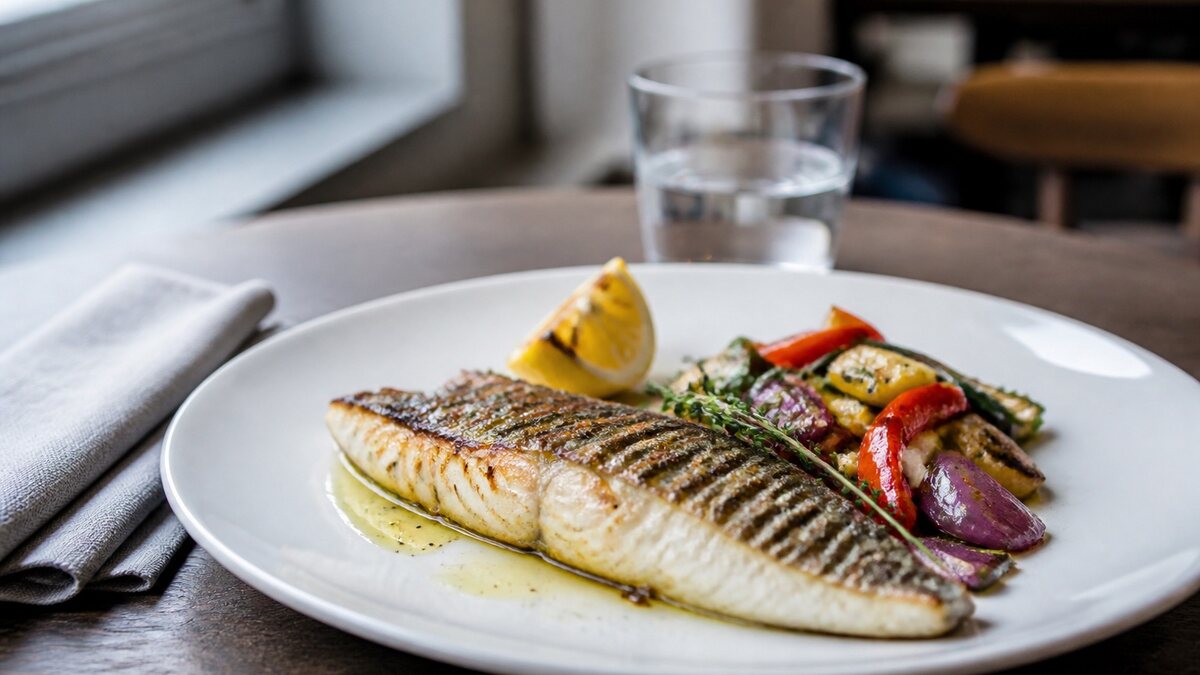
People looking at a restaurant menu for protein often hunt for the word chicken, fish, tofu, or steak. That is a reasonable first filter. It is not enough. The protein in the title can be a modest piece of meat on a plate that is mostly sauce, breading, cheese, or a starch.
If you care about protein because you are cutting, recovering, or trying to stay full, you need the plate, not the noun.
A protein name can still be a carb plate
Chicken parmesan is chicken. It is also breading, cheese, and pasta. A teriyaki bowl is chicken. It is also glazed sauce and a pile of rice. Fish and chips is fish. It is also batter and fries.
None of these dishes is a trick. They are complete restaurant plates. The mistake is treating the animal or the tofu as the whole meal.
When you compare two chicken dishes, compare the construction:
- Grilled, roasted, or steamed versus fried or breaded.
- Sauce on the side versus glazed, creamy, or sweet.
- A vegetable side versus potatoes, noodles, or a bun.
- A visible portion of meat versus strips mixed through a salad or a stir-fry.
The second chicken dish can have less protein and more energy than the first, even though both are “chicken.”
Sides quietly undo the point
A lean main with garlic bread, mashed potatoes, and a sugary drink is no longer the high-protein meal you pictured. The side is not a footnote. In many restaurants it is half the plate.
Useful questions before you order:
- What is the default side?
- Can you swap it for a vegetable or a salad you actually want?
- Is the protein itself sauced in a way that you cannot separate?
You do not need to build the lowest-energy plate in the room. You need the plate that matches the reason you were scanning for protein in the first place.
Bowls hide the ratio
Grain bowls, poke bowls, and “protein bowls” are hard to read because the restaurant mixes the ratio for you. A bowl can be mostly rice with a few slices of fish. It can also be a generous protein portion with a small starch.
If the menu lists the parts, use that. If it does not, look at the description order and the price: a cheap bowl with many mix-ins is often starch-first. A photo, if the restaurant shows one, is a better clue than the marketing name.
Once the bowl arrives, you can still eat the protein and leave some of the rice. Logging that choice is more honest than logging the marketing name.
What a tracker can and cannot do
A menu search is strongest when the restaurant publishes a standard item. A photo of the served plate can help you describe what arrived. Neither one is a lab value. Hidden oils, marinade, and the cook’s portion still sit outside the picture.
Use the strongest source you have, then adjust. If you ordered grilled fish and it arrived with a butter sauce you did not expect, the log should follow the plate, not the plan.
Trayly is built for this kind of restaurant reading: compare dishes against your day, then review the estimate before you save. It will not make the kitchen’s recipe exact. It will keep the protein question attached to the actual meal.
A short ordering checklist
- Find dishes whose protein is cooked simply enough to see.
- Check the sauce and the breading before you check the calorie vibe of the name.
- Look at the default side, then change it if it fights the point of the order.
- When the food arrives, log what you ate, including the sauce you did not plan for.
Protein on a menu is a starting clue. The plate is the answer.