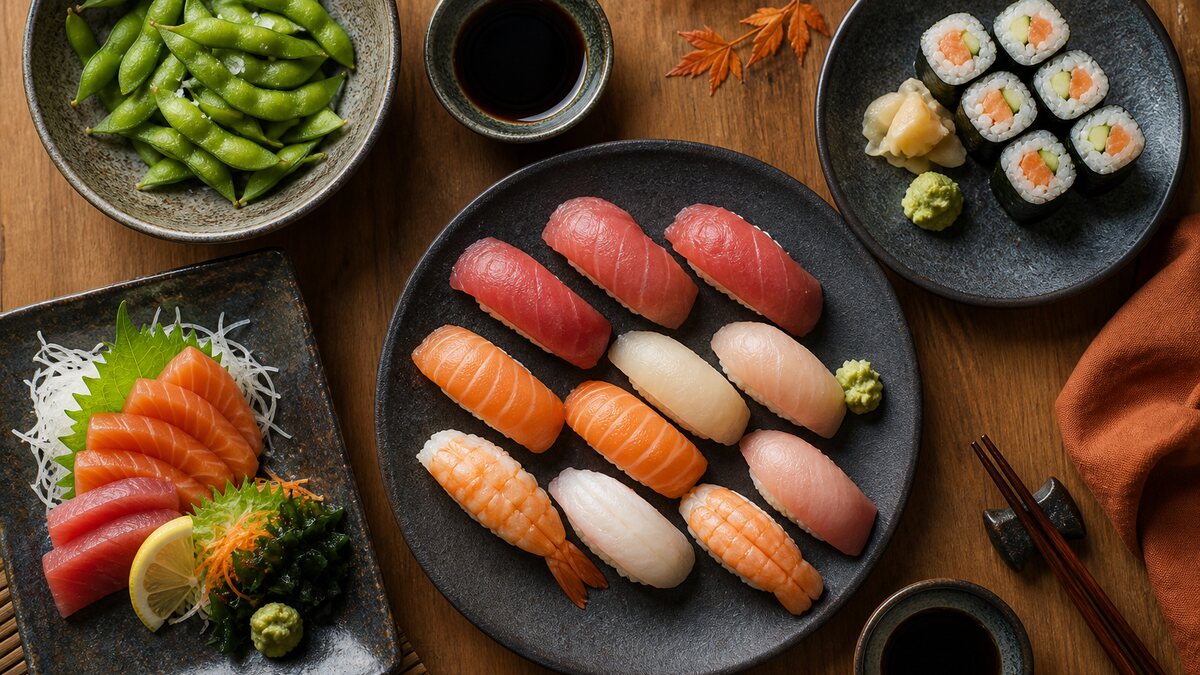
Sushi looks countable: six maki, two nigiri, one bowl of miso soup. That makes it easier to describe than many restaurant meals, but not automatically easier to estimate. A “roll” may be slim hosomaki or a large inside-out roll filled with fried seafood, avocado, and mayonnaise. Even pieces with the same name vary in rice weight and fish cut.
Use piece counts, but connect them to style, fillings, and the restaurant’s own data whenever possible. Calories and macros are properties of the served recipe and portion—not universal values attached to Japanese names.
Begin with the format
First separate what you ordered:
- Sashimi: fish or seafood without rice; cut thickness determines the portion.
- Nigiri: a slice of fish over a hand-shaped rice mound, sometimes brushed with sauce.
- Hosomaki: narrow rolls, usually with one main filling.
- Futomaki: thicker rolls with several fillings.
- Uramaki: inside-out rolls with rice on the outside, often with toppings or sauce.
- Temaki: hand rolls; cone size and filling ratio vary widely.
Record pieces within each format instead of entering “12 sushi.” If a chain publishes nutrition information, match the named item and serving count. For an independent restaurant, the menu description and a full-plate photo provide the next-best evidence.
Rice is the key variable
Sushi rice supplies most of the carbohydrate in nigiri and maki. It is seasoned, generally with vinegar, sugar, and salt, and its amount depends on the chef and roll style. Counting pieces cannot tell you the rice weight.
Compare pieces visually. A nigiri with a compact mound is not the same as one with a large base. Uramaki often carries a substantial rice layer around the filling, while sashimi has none. If you left rice behind, adjust only when the amount is obvious; do not assume a partially detached grain layer has a precise weight.
Fish changes protein and fat
Fish usually contributes most of sushi’s protein, but the serving differs by cut. A thick sashimi slice can contain more fish than a thin piece of nigiri. Salmon, tuna, eel, mackerel, prawn, and imitation crab also have different macro profiles. “Fish sushi” is too broad for a meaningful macro estimate.
Choose the species and format you ate. Distinguish plain fish from battered prawn, mayonnaise-based tuna mixtures, or glazed eel. These are not reasons to avoid a roll; they are reasons to log its actual construction.
Fillings and toppings can dominate a roll
A simple cucumber or tuna hosomaki is mostly rice plus one filling. Specialty rolls can add tempura, cream cheese, avocado, spicy mayonnaise, crunchy flakes, and a sweet glaze. The menu name may not reveal quantities, but it usually reveals preparation words worth retaining.
When scanning a restaurant menu, look for:
- Fried or tempura ingredients.
- Cream cheese or mayonnaise-based fillings.
- Avocado and other substantial fillings.
- Toppings such as additional fish, sesame, or crunchy crumbs.
- Drizzled sauces and eel glaze.
Avoid double-counting a sauce already included in an official restaurant item. Add it separately only if you ordered extra or the served roll clearly differs from the standard listing.
Soy sauce and sides belong in the meal
Soy sauce generally matters more for sodium than for energy, but the amount used still belongs in a complete record if you track sodium. Dipping touches only part of each piece; an emptied dish does not prove all of it was consumed because rice and ginger can remain in the bowl.
Also record miso soup, edamame, seaweed salad, gyoza, tempura, drinks, and dessert. Pickled ginger and wasabi can be noted without spending more effort than their role warrants. Focus review time on rice volume, fried elements, creamy fillings, and sauces.
Build a macro estimate that matches the order
Separate the meal into a rice base, fish or other protein, and additions. This makes the macro logic visible:
- More nigiri and maki generally means more carbohydrate from rice.
- More sashimi generally shifts the meal toward protein, depending on fish and cut size.
- Salmon, mackerel, avocado, mayonnaise, and fried additions can raise the fat contribution.
- Sweet glazes and larger rice portions add carbohydrate beyond the visible fish.
These are directions, not guaranteed numbers. Restaurant recipes and portions vary. Official nutrition information should take priority; otherwise use a comparable item and retain an uncertainty range.
Photograph and log a shared platter
Take one photo before anyone starts and another of your own plate if possible. Count what you ate by type: “two salmon nigiri, one tuna nigiri, four pieces spicy salmon uramaki, two sashimi.” A final photo of leftovers can resolve uncertain counts.
A restaurant calorie tracker or Trayly can draft a reviewable estimate from that description. Correct species, piece count, and fried or creamy additions before saving. It cannot see rice weight inside a roll, and its output is not an exact measurement; our AI calorie accuracy guide explains why.
A concise sushi checklist
- Prefer official restaurant data for the exact item and serving.
- Separate sashimi, nigiri, maki, uramaki, and hand rolls.
- Count pieces, then check their size and rice proportion.
- Name the fish and any tempura, mayonnaise, cream cheese, avocado, or glaze.
- Add sides and drinks separately.
- Review the estimate rather than accepting a generic roll.
As with pizza, format and portion beat the category name; see our pizza tracking guide for the same method applied slice by slice. Sushi is unusually easy to count and unusually easy to oversimplify. Preserve both the count and the construction, and the log becomes far more useful.