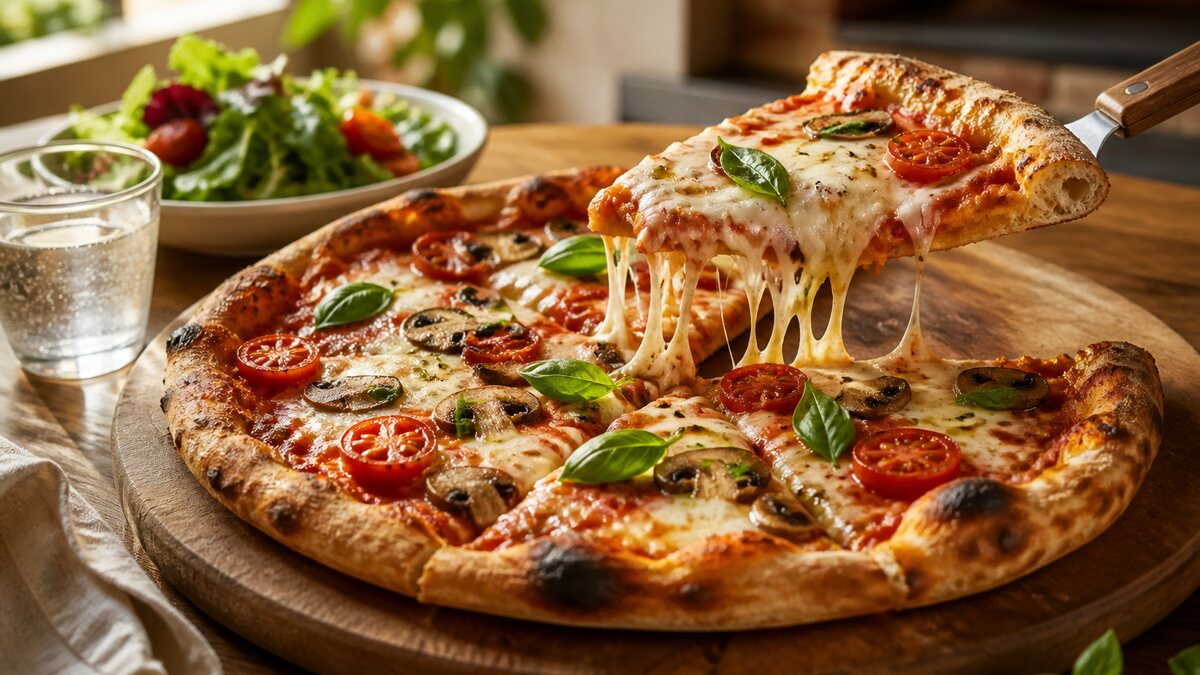
“Three slices of pizza” sounds like a complete food log. It is not. A slice from a small thin-crust pie and a wide slice from a deep-pan pizza can share a name while containing very different amounts of dough, cheese, oil, and toppings.
You do not need to solve the recipe to make a useful entry. Identify the whole pizza, count what you ate, and describe the features that materially affect each slice. The result remains an estimate, but it is anchored to your meal rather than a generic “slice.”
Use the restaurant’s pizza first
For a chain or restaurant that publishes nutrition data, begin with its official listing. Match the size, crust, topping combination, and stated serving. Check whether the number is per slice, per serving of multiple slices, or for the whole pizza. Also check how many slices the restaurant assumes; an eight-slice pizza cut into ten pieces has not changed its total energy.
Official data describes the standard recipe. Extra cheese, a crust dip, a size substitution, or a heavily topped kitchen portion still calls for an adjustment. For an independent pizzeria without published data, compare by construction rather than choosing the first database result.
Establish diameter and slice count
The diameter of the pie matters more than labels such as small, medium, or large, which vary between businesses. If you ordered from a menu, keep the listed diameter. If the pizza is shared and unknown, note the box size or estimate the diameter before slices disappear.
Then record both the original cut and your count: “12-inch pizza cut into eight; ate three slices.” Uneven restaurant cuts complicate this. If one slice was visibly twice another’s area, count by fractions of the whole—roughly three-eighths, for example—instead of pretending each piece was equal.
Read the crust
Crust is the pizza’s foundation and often its largest component. Describe it accurately:
- Very thin or cracker-style: less dough, though oil and toppings still matter.
- Neapolitan-style: thin center with a puffy rim; diameter alone can overstate the dough.
- Hand-tossed: a moderate base and edge, with large variation between restaurants.
- Pan, deep-dish, or Detroit-style: thicker dough and often oil in the pan.
- Stuffed crust: includes a filling that should be part of the selected item.
Do not subtract every uneaten crust edge by guesswork. If you left all three rims, estimate their visible share or use a “crust left” note. A few bites left behind rarely justify rebuilding the entry.
Sauce and cheese are not constants
Tomato sauce is usually less uncertain than cheese, but recipes differ and some sauces contain added oil or sugar. White pizza, pesto, barbecue sauce, and creamy bases need a closer match than plain tomato.
Cheese can range from a light scattering to a thick double layer. Note regular, light, extra, or cheese-free. If oil visibly pools on top, do not assume every drop came only from cheese; cured meats and finishing oil can contribute. Choose a pizza entry that visually resembles the coverage and add an extra only when it was clearly ordered or applied.
Group toppings by what they change
You need not count every onion strip. Separate toppings into useful groups:
- Vegetables and herbs, including whether they were oil-marinated.
- Leaner proteins such as chicken, tuna, or prawns.
- Cured or fatty meats such as pepperoni, sausage, salami, and bacon.
- Dense additions such as extra cheese, burrata, pesto, or garlic oil.
Toppings vary in quantity by restaurant, so no universal pepperoni-slice formula is reliable. An official build is best when available. Otherwise a clear description and a range are more honest than a precise-looking number.
Count dips, sides, and drinks
Garlic dip, ranch, chili oil, and garlic butter are easy to miss because they are not on the pizza. Log the amount consumed, not merely the number of tubs opened. Add wings, salad dressing, breadsticks, dessert, and drinks as separate items. This makes the pizza entry reusable if leftovers become tomorrow’s lunch.
If several people shared different pizzas, photograph each whole pizza and your plate. A restaurant menu scan can retain the exact names, while a restaurant calorie estimate can help when official information is absent. Review any result: software cannot infer diameter or hidden cheese reliably from a close crop.
Estimate macros without false precision
Pizza typically combines carbohydrate from dough, protein from cheese and toppings, and fat from cheese, meat, and oil. The balance changes with construction. A thin vegetable pizza and a meat-heavy pan pizza are not interchangeable even when their slice counts match.
When macro information is published, use it. Otherwise treat estimated macros as directional. A photo may identify toppings but cannot weigh cheese or determine how much oil was absorbed. The same limitations apply to sushi rice and sauces, as explained in our sushi calories and macros guide.
A reliable pizza entry
Write one line before searching: “14-inch hand-tossed tomato pizza, regular mozzarella, mushrooms and pepperoni, eight equal slices, ate three, plus half a garlic dip.” That description contains the decisions a generic entry lacks.
Compare it with official information or a close reference, adjust the fraction eaten, and review the uncertain cheese, meat, and dip. Trayly can help draft this as a reviewable estimate, not an exact measurement. The principles in our AI estimate accuracy guide are useful whenever the only evidence is a menu and photo.
The goal is not to discover the one true calorie count of a handmade pizza. It is to stop treating all slices as identical. Size, fraction, crust, cheese, major toppings, and extras will give you a consistent entry—and leave enough attention to enjoy the slice while it is hot.