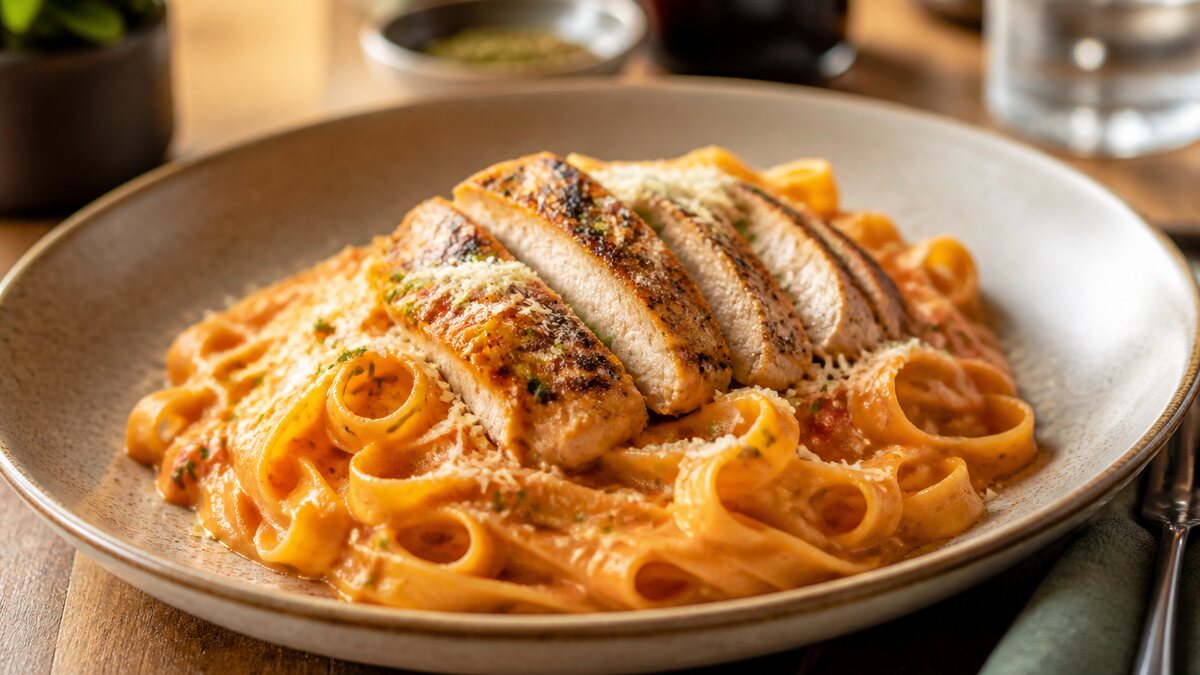
Restaurant pasta resists a single calorie rule. A shallow bowl can hold a compact tangle of fresh pasta; a deep bowl can hide sauce below the surface. Alfredo, ragù, pesto, and tomato sauce change the dish differently, and kitchens choose their own portions. Even the same menu item may be plated with more cheese or oil on a busy night.
A useful estimate starts with the restaurant’s recipe when available. When it is not, describe the noodle portion, sauce family, major additions, and amount eaten. Avoid universal “one bowl” figures: bowl shape, recipe, and serving size make them unreliable.
Check the exact menu item
Chains sometimes publish calories and macros for a standard pasta. Use the official source, checking market, portion, included protein, and sides. Determine whether bread, salad dressing, or a finishing cheese is included in the listing. A lunch portion may be a different item, not simply an arbitrary fraction of dinner.
At an independent restaurant, save the menu description. Words such as cream, butter, pesto, baked, breaded, four-cheese, and finished with olive oil reveal more than the dish photograph alone. A menu scanner helps retain those details before the menu disappears.
Identify pasta type and amount
Shape does not assign calories by itself, but it affects how sauce clings and how a portion looks. Long noodles pack differently from tubes; filled pasta includes cheese or meat inside; gnocchi is not interchangeable with spaghetti; fresh egg pasta may follow a different recipe from dried pasta.
Describe the served amount as a fraction of the bowl or compare it with a familiar portion. If you took leftovers home, that creates useful evidence: estimate the fraction eaten at the table and log the remainder when you eat it. Do not convert visible volume to an exact weight unless the restaurant provides one.
Classify the sauce
Sauce is often the largest source of uncertainty. Start with a family, then note the visible quantity:
- Tomato-based: may be relatively simple or enriched with oil, cheese, meat, or sugar.
- Cream or cheese-based: includes Alfredo-style sauces and multi-cheese preparations.
- Pesto or oil-based: can look like a thin coating while carrying substantial oil, nuts, and cheese.
- Meat ragù: combines sauce with a variable amount and type of meat.
- Seafood sauce: can be tomato-based, creamy, buttery, or oil-based.
- Baked pasta: often includes sauce, cheese layers, and sometimes béchamel.
A bowl with sauce pooled at the bottom is different from pasta lightly coated. If much of the pool remains, adjust the consumed sauce rather than reducing the noodle portion.
Add protein and vegetables accurately
Chicken, prawns, meatballs, sausage, and seafood may be included in the official dish or added as an option. Record count and preparation. Grilled chicken is not the same reference as breaded fried chicken; meatballs and sausage include their own recipe variation.
Vegetables help identify the dish, especially when roasted in oil or served as a substantial component. Do not assume a vegetable pasta has little added fat. Conversely, there is no reason to create exact entries for every spinach leaf when sauce and pasta dominate the uncertainty.
Review finishing ingredients
Parmesan grated at the table, burrata, ricotta, toasted breadcrumbs, chili oil, truffle oil, and butter are easy to miss because they arrive after the sauce was made. Include visible or requested additions. If the standard restaurant nutrition already includes parmesan, avoid counting it twice.
Bread and butter are separate from the pasta even when served automatically. Log what you ate. The same goes for salad with dressing, wine, soft drinks, and dessert. A complete meal estimate does not require forcing everything into the pasta bowl.
Estimate macros from the construction
The pasta itself usually supplies most carbohydrate. Cheese, meat, seafood, and some filled pastas contribute protein; oil, butter, cream, cheese, pesto, sausage, and preparation methods affect fat. The balance changes with the recipe and portion, so a tomato spaghetti and a baked cheese pasta should not share macro assumptions.
Prefer official macros. Otherwise use a close recipe and maintain a range, especially for sauce. A restaurant calorie tracker or Trayly can draft a reviewable estimate from the menu and plate, but neither can measure the hidden oil or cooked pasta weight. See the AI calorie estimate accuracy guide before interpreting a detailed output as exact.
A practical logging sequence
- Record the exact menu name and description.
- Select pasta style: plain, filled, gnocchi, or baked.
- Estimate the served and eaten fractions.
- Match the sauce family and how heavily it coats the pasta.
- Add protein, cheese, oil, crunchy toppings, and sides not already included.
- Prefer official data, then review the uncertain components.
For dishes with several sauces and shared sides, the component logic in our Indian restaurant calories guide is also useful. A pasta estimate becomes defensible not because the final number has many digits, but because its assumptions are visible. Capture the bowl, the recipe clues, and the leftovers; those matter more than finding a universal value that does not exist.